

The historic contest of English & Australia teams is illuminated through legendary personalities. Within, fans share their most cherished cricketers across men's Ashes timeline.
Jonny Bairstow
On the topic of a favourite player, the pick is Jonny Bairstow. His journey during the Ashes aptly encapsulates the highs and lows for an England player. It began with the 2013 series, where he tempered his natural instincts to dig in with Ian Bell. That winter, he was promoted as a replacement for gloveman Matt Prior, confronting the formidable Mitchell Johnson having no first-class preparation in three months.
He had an Ashes-winning comeback during 2015 , plus is the only English player with two away Ashes centuries after the year 2011, an achievement accomplished despite ferocious local press attention. A poor series followed in the 2019 Ashes, although there was a crucial cameo in the Leeds Test that aided the legendary run chase by Stokes and Leach. Post-injury for 2023, a magnificent 99 not out at Manchester would have been robbed of a series-turning status by persistent rain.
The Inimitable Syd Barnes
Few bowlers command such awe like the wonderful Syd Barnes. His performance taking 13 wickets in 80 overs during the 1901-02 Ashes Test stands as a monument to his genius. It's fascinating to ponder what more he could have accomplished if he were a less difficult character to handle. Boasting an incredible 6,229 wickets with a cost of just 8.33 runs, he is regarded by many as the finest bowler. Reading about his statistics as a youth was completely captivating. What a magnificent rogue, truly incomparable. As MCC secretary Billy Griffith: “The extraordinary thing regarding him was that all his contemporaries considered him the best there was. There was never any doubt about it.”
The Charismatic Richie Benaud
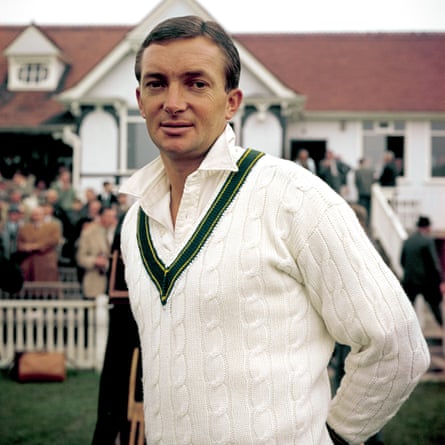
For many, the ultimate player is the iconic Richie Benaud. A move to secondary school in 1961 aligned with the Ashes series, and the excitement was conjured by the dashing skipper. Benaud stood out like other cricketers; with style and daring, a stark difference from the more traditional English game. He was articulate, charismatic leader who came known for playing attacking, exciting cricket.
Memories from that season, when a permanent passion with cricket began, centre on the final day of Old Trafford. Glued to the broadcast, the viewer saw England require 256 runs. A good start had Ted Dexter play a widely acclaimed one of the great Ashes innings. However he fell for 76, taken by Wally Grout off the bowling of Benaud. Hope remained as skipper Peter May arriving at the crease. A delivery from Benaud and May deflect the ball to leg. Next up, Benaud bowled again outside the pads, it turned sharply out of the footmarks and hit the stumps. The captain was dismissed for a duck, the hush deafening. Benaud sealed victory taking 6 for 70 , thus Australia kept the Ashes. It was bittersweet emotion—wanting an England win but marvelling at an undeniable champion.
The Indefatigable Ian Botham
He is the greatest England cricketer. Indefatigable, inspirational, exceptional. For his heroics at Headingley in '81, Old Trafford 1981, the triumphant 1986-87 Australian tour, not forgetting his famous retort about Merv Hughes. A hero both for his philanthropy and his immense strength of character.
Harry Boyle
The annals sometimes forget figures like Harry Boyle, who should rightfully be in any list of key figures of Ashes history. Boyle was Fred Spofforth's bowling partner during the iconic 1882 match, his role was as vital as his partner's to secure victory. Indeed, he was the one who bowled Edmund Peate to win that historic game. While Fred Spofforth is rightly hailed as the father of modern fast bowling, Boyle was modest , retiring, always putting the team first. This humility resulted in his legacy becoming overshadowed, even though he was widely recognised as an important figure in the sport's development.
Don Bradman
The answer must be Don Bradman. While Shane Warne is a legend, the monumental volume of runs he accumulated versus the old foe, combined with his tactical acumen, establishes him as more than a great player but as the only possible answer. An Ashes average nearly ninety, two scores over 300, including a brilliant double-hundred following a bold move to flip the lineup to protect his senior players on a damp wicket at the MCG during 1937.
Although not from his era, every enthusiast becomes familiar with his exploits in the 1930s , particularly, the Invincibles tour. While most remember the final duck preventing a 100+ average, some treasure images of his practice for hours using a water tank, and witnessing him withstand the brutal Bodyline tactics and still emerge 56 runs per innings in a notoriously difficult series for batsmen. He remains the greatest batsman for countless fans.
Mike Brearley
He elevated the art of leadership, with its critical role, to unprecedented heights. He defined his era by demonstrating that success against Australia, especially in Australia, required not just effort or brute force. He inspired through thoughtful, intelligent leadership, fostering a culture in which his players' true qualities could flourish. His understanding of the game, the match state, and individuals was masterful at the very moments a shift of momentum was needed.
His was a beautifully subtle, subtle method {that challenged|contradict


